Album Review - "Act III: This City Made Us" by The Protomen
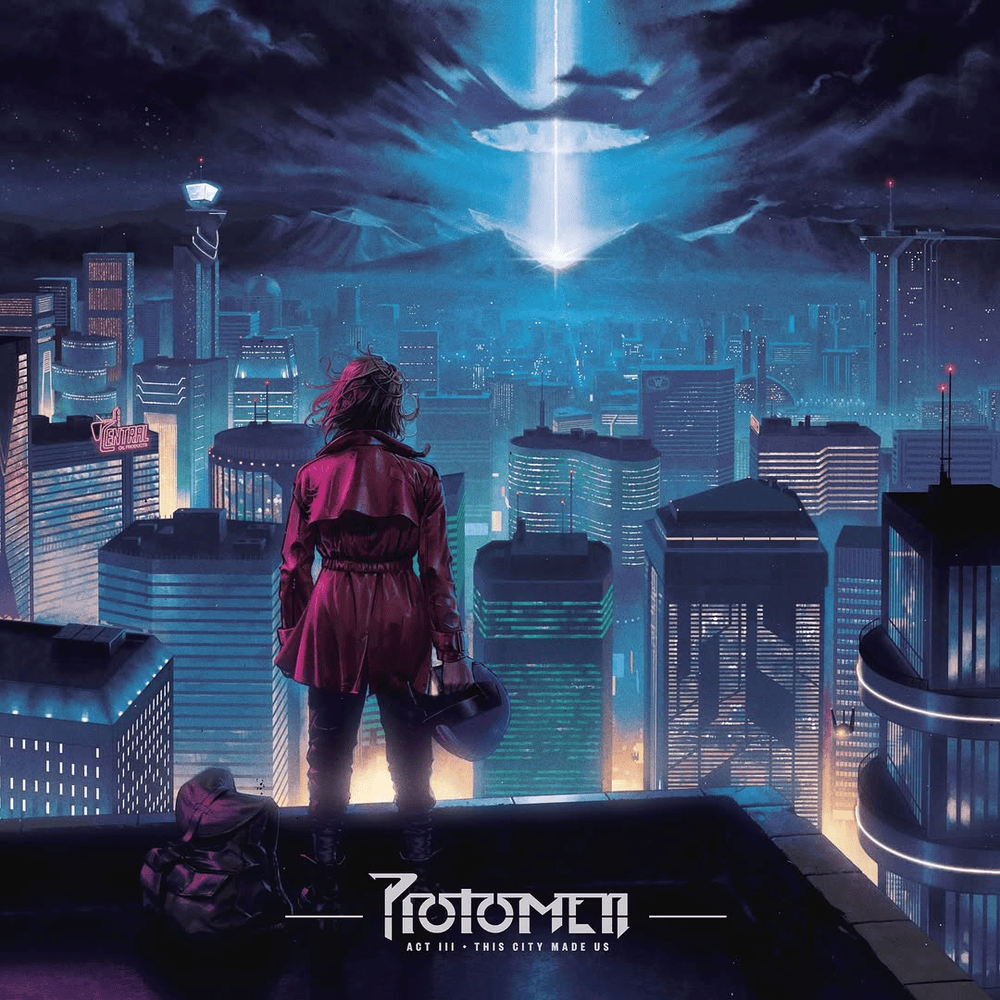
The following review contains story spoilers for the entire rock opera series released by The Protomen so far.
The world was a much better place in 2005.
This statement, of course, is complete bullshit, but what is true is that in 2005 I was 15 years old. And not only was I 15 years old, I was 15 years old with a PC connected to the Internet in my bedroom (and now you know why I am the way I am.)
However, in-between furious fapping sessions I was also an enthusiastic lover of the geek/nerd culture of the time, particularly of video games. Next to my PC, my PlayStation 2 was my best friend, and Metal Gear Solid 3: Snake Eater was my bible. I was also an avid lover of video game magazines; by this point I had amassed a healthy stack of issues of GamePro, Electronic Gaming Monthly, Tips & Tricks, and Official U.S. PlayStation Magazine (and if on my death bed you ask me if I have any regrets, not keeping a hold of these magazines is pretty goddamn high up there.) By this point, online media was well on its way to dominating physical print, but broadband Internet connections were not yet the norm, so magazines were a great place to stuff in CDs or DVDs with game trailers, previews, reviews, and demos. The OPM demo discs will always hold a special place in my heart, and I must have watched GamePRO's preview of Dead or Alive Xtreme Beach Volleyball several dozen times.
One of these DVDs - I can't remember which one at this point (and of course, I don't have the damn thing) - introduced me to Mega64, a group that have managed to remain a bastion of creativity in the video game sketch comedy scene for over two decades now. And another DVD (or perhaps the same DVD) had songs from a band called The Advantage.
The Advantage was a four-piece rock band from Sacramento, CA founded by none other than Spencer Seim (it would be many, many years later until I found out who Zach Hill was, and then I found out about Hella, and then I heard about this new Zach Hill project called Death Grips, and then [NOTE FROM EDITOR: sidetrack removed for brevity]) who performed covers of songs from Nintendo games (specifically the NES, hence the name of the band) using little or no synthesizers, but instead adapting the tunes to electric guitar, bass, and analog drums. Placing the magazine DVD into a PC's DVD-ROM drive revealed three of the band's songs in MP3 format - Mega Man 2 Dr. Wiley Stage 1, Metroid Kraid's Lair, and Contra Alien's Lair and Boss Music - along with a video of a live performance of Mega Man 2 Flashman. I was no stranger to these game themes, and hearing them performed in a whole new way was mind-blowing. I became an instant fan. I purchased their self-titled album from the local Tower Records, and eagerly awaited their follow-up album Elf-Titled.
Finding this band - a geeky rock band from my home town, a band that literally no one I talked to had ever heard of, a band with members who would go on to do some crazy shit - awakened something great in me. I wanted to know more about these guys, and more importantly to this story, I wanted to know: who else is doing stuff like this?
There's no shortage of video game cover music out there, but at this point it was still a niche pocket (YouTube was just starting out and people didn't quite know what to do with it yet.) But in those days, if you wanted to learn about something, you went and found whatever message board was talking about it. I started finding more groups who occupied this "video game music" space, and that's how I stumbled upon The Protomen.
Based in Nashville, The Protomen started as a group of MTSU students cramming to finish a school project, but quickly evolved into a proper band. The Protomen take their name from the character of the classic Capcom game series Mega Man and use the series' story as a loose backdrop for their own Orwellian-themed rock opera. The Protomen's self-titled debut album sets the stage - a city is under the tyrannical rule of Dr. Albert Wily, enforced by his army of evil robots. The people are subjugated, but also complacent, and no one will fight back against the system - no one except Dr. Thomas Light, Wily's old friend and partner, whom Wiley betrayed to take control of the city. Dr. Light builds a fighting robot to take on Dr. Wily - the titular Proto Man - but Proto Man ultimately loses the fight and is taken by Dr. Wily's robots. Light, defeated and losing his hope in people, retreats to the darkness and builds a robot son - Mega Man, also known as Rock. He tells Rock of his folly and warns the robot not to follow in his brother's footsteps, but Rock, having been built with a strong sense of justice, ignores his father's pleas and takes on Wily's army. Unfortunately, Wily is ready with a secret weapon - Proto Man, who now bears a grudge against mankind for refusing to fight for their freedom. Proto Man and Mega Man fight, and at the urging of the people watching, Mega Man kills Proto Man. However, before Mega Man can deal the final blow against Dr. Wily, he walks away, leaving the people of the city to face the wrath of Wily's robots alone...and it doesn't go well.
"The Protomen" (later on referred to by the band as Act I) is a dark, distorted rock opera with a gnarly production style that reflects the nature of its setting. Lead vocalist Raul Panther III belts these emotional tunes with a sincerity so deep you forget you're listening to an album about a video game. The album was very well-received and The Protomen became an instant staple of online geek culture, becoming mainstay performers at game conventions such as MAGFest, and performing with indie talents such as Makeup & Vanity Set.
In 2009, The Protomen released their follow-up album "Act II: The Father of Death" which saw a marked increase in production quality, song writing, and performances. The album serves as a prequel to the events of Act I, depicting the relationship between Thomas Light and Albert Wily before Wily enacted his plan for domination. The album begins in a Morricone-inspired spaghetti western vibe as Light and Wily argue about what to do with their new robotic inventions - will the be used to serve humanity, or subjugate them? Light throws the switch, sending the city hurtling into a new era, but is framed by Wily for the death of his lover Emily and banished from the city by an incensed mob. As Wily's robots start to take over the city, the music shifts into heavy synths and distorted electric guitars. A lone hero named Joe sees how bad things are, and escapes the city; he tangles with one of Wily's robots before he is saved by Dr. Light. The two of them plot to take down Wily, but as Joe reaches the tower at the heart of the city, a trap is sprung and our hero loses his life. Dr. Light tells Joe's corpse "When you see Emily, tell her to wait for me...because I still have work to do." The album leads beautifully into the beginning of Act I, and The Protomen were not shy about letting fans know that the story would continue in Act III.
The conclusion of that story, however, would have to wait.
Act II: The Father of Death launched The Protomen into indie superstar status. They toured frequently, continued to play MAGFest, and recorded three new albums - an album of cover songs, a live tribute to Queen, and a live set from their home town. News of Act III, however, dried up, with fans clamoring to know when it was coming. The band released a few teaser tracks, but no release date for the album came. In time, many fans, including myself, began to lose hope that the story would conclude. Their newsletters always promised that something was coming, but the band stood on business - the album would come out when it's done.
But now, seventeen years later, here we are - Act III: This City Made Us is here, it's real, and it's spectacular.
As of the time of this review, I have listened to the album in its entirety about five or six times. I have been listening to the digital release on Bandcamp, and while the songs do a good job of conveying the story, it should be noted that each physical release of a Protomen album contains a booklet with the libretto of the story, including detailed descriptions of scenes that occur during the instrumental tracks. As such, my current view of the *exact* details of the story are incomplete, as the band has kindly asked that the libretto not be published online just yet, and my CD copy is still in the mail. This review is mostly based on my impressions of the songs themselves with some consideration given to the greater narrative when I am able.
The opening track "The Calm" places us back into the city of the future with lush, fatty synths and crashing pianos, sounding more like a track from Blade Runner than Mega Man. We then go straight into "Hold Back the Night," one of the teaser singles previously released. The female vocalist of the group Gambler Kirkdouglass belts an impressive call-to-action as a new character who seems to be mounting a resistance group, but still believes that an old hero will come back to fight. The song is bombastic with plenty of 80's pastiche, leaning heavily on the band's influence from Queen and Bonnie Tyler. "The Trainyard" is a dark, brooding instrumental detour into my personal favorite track, "No Way Back". Dr. Light laments the fall of the city and wonders what to do as thick rock guitar and laser synths lay a steady rhythm like train tracks leading inward. Lead vocalist Raul Panther III displays his whole range, starting from a low growl and crescendos into a Freddy Mercury wail leading into a sick guitar solo. There's a layer of cheese here, but everything is played completely straight. Rain falls as "The Storm" arrives and the synths stab and the guitars rise to a peak before diving off a cliff and thundering into a rockabilly groove from hell as "Buried in the Red" kicks into gear. Dr. Wily likens his control of the city to that of driving a race car and pushing it to the limit, perhaps to the point where he's starting to lose control. The track is a throwback to Wily's narrative track from Act II, "The Hounds" but coated with more distortion and the tempo pushed. It's the kind of track you throw on when you're trying to push through the last 5 minutes of your workout.
Our female protagonist returns on "Calling Out", who seems to have found our old hero Mega Man and is trying to convince him to join the resistance. The song has a driving energy to it, with even more Queen-influenced guitars and soaring vocals. The response comes in "This City Made Us", another of the teaser tracks released previously. The song warns of the perils of fighting back against Wily, arguing that the city, and its inhabitants, are already doomed to fade away. Power chords chug and the drums hit blast beats on the bridge leading into a chorus of the two vocalists in a duet, both of them hitting some of their highest ranges. While the performances from the band up until this point have been great, it's this track that really shows just how good these guys are as musicians, effortlessly able to code switch into a new vibe as the narrative demands. The next track "Hold On (The Distance Between)" sees the return of Mega Man as he begins to regret his choice to leave humanity behind and prepares himself to re-join the fight. It's a triumphant song that pays homage to Robert Tepper and indeed sounds like a big hero come-back song from an 80's movie. Two more instrumental tracks "The Redline" and "A Show of Force" mirror the tonal structure of Act II - Western style guitars, brass horns, and a marching snare drum transition into heavy metal rock guitar, crashing symbols, and ominous synths. We slip into "The Dream", a melodic piano ballad where Dr. Light and Emily are briefly re-united in spirt, their voices dancing around each other and climbing an accent to Heaven itself.
The narrative is approaching its climax with "Light's Last Stand", by far the most operatic song on the album. The song itself has a three-act structure, again paying homage to Queen and their Bohemian Rhapsody. To me, this song dips a little too heavy into cornball territory, with a sexy Tim Cappello saxophone solo that sounds ripped from the Full House theme song. However, you cannot deny the sheer anticipation that the song builds, and the band is going full-tilt like a train with no brakes.
"The Good Doctor, Pt. II" makes direct reference to the beginning of Act II, re-introducing the horns, finger-picked guitar, and drum march as Dr. Light and Dr. Wily face off one last time. It's an emotional track and pits the conflict between these two friends as the primary focus of this story, somewhat to the detriment of the character building established in the first half of the album. Our female protagonist, Mega Man, and any mention of the resistance is quitely moved to the background as Light begs Wily one last time to turn off his machine that has gone so out of control. The album ends in a somber flood of strings and vocal chorus with "The Fate of Thomas Light", and we are literally left hanging as Dr. Light is executed in front of a crowd just as Mega Man arrives to witness. It's a sour note to end the album on, but narratively rich enough that one could use their imagination to fill in the blanks. Noticably absent from the album is a track called "The Fight", the third of the Act III teaser tracks released, and the band has been very coy about its absence. Combined with some clues figured out from fans attending the latest MAGFest, it appears that this is not how the story ends. Hopefully we won't have to wait another seventeen years to find out...
Overall, I am impressed with how well this album came out. I have to admire the band for not caving to any sort of pressure to release something they weren't proud of, but rather take their time to release what is on almost all fronts their absolute best material to date. Every sound on this album is sharp and clean - at times, TOO clean. Other than the flamboyance of "Light's Last Stand" my only other gripe would be that I'm missing some the apocalyptic grit that was last heard on Act I, cast aside in total favor of a more polished and focused 1980's glam aestetic, notwithstanding a few references to the Act II flavored spaghetti western style. Was it worth the wait? Honestly, I don't even care about that anymore - the band has displayed a consistent ethos, have put in the work to improve and develop their sound, and have managed to work together as a cohesive unit for over twenty years (despite a rotating cast of extras, the core members of the band have remained the same.) If they never released Act III, they would still be one of my favorite rock bands of all time (and their cover of I Drove All Night is the best one, fight me.)